Introduction
Smart home appliances are changing the way people manage their homes. From refrigerators and washing machines to air conditioners and ovens, these connected devices offer features such as remote control, automatic scheduling, and energy monitoring. But are smart home appliances worth the extra cost? The answer depends on your budget, lifestyle, and how often you will use their smart features.
This is where smart home appliances come into the picture.
Smart appliances are designed to connect to the internet, smartphones, smart home systems, or other devices. Depending on the model, they can provide notifications, allow remote control, monitor energy consumption, automate certain tasks, and sometimes adjust their operation based on your habits.
But there is one obvious question that comes up when you see the price tag:
Are smart home appliances actually worth paying extra for?
The answer is not a simple yes or no.
For some people, smart features can make everyday life considerably easier and may even help reduce energy waste. For others, paying extra for Wi-Fi connectivity, apps, touchscreens, or voice controls may not make much practical difference.
The important thing is to look beyond the word “smart.” A smart appliance is only worth the extra money if its features genuinely solve a problem for you.
So, before spending your money on the latest connected refrigerator, washing machine, dishwasher, oven, or air conditioner, let’s look at what these appliances actually offer, their disadvantages, their electricity consumption, and when upgrading makes sense.
Table of Contents
- Introduction
- What Are Smart Home Appliances?
- What Is the Point of home Smart Appliances?
- How Smart home Appliances Make Everyday Life Easier
- Are Smart home Appliances More Energy Efficient?
- What Are the Disadvantages of Smart Appliances?
- Do Smart Homes Use More Electricity
- Smart Appliances vs Traditional Appliances
- Final Verdict
- Frequently Asked Questions
What Are Smart Home Appliances?
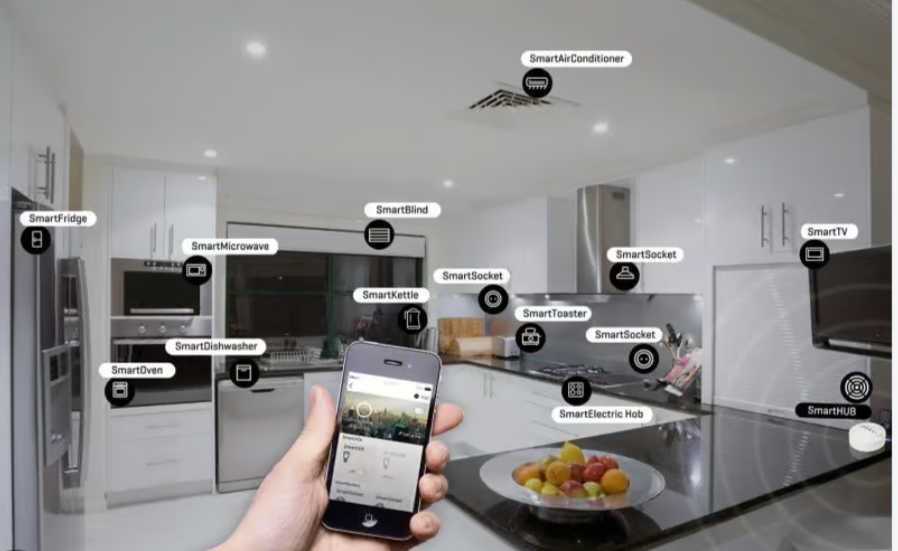
Smart home appliances connect everyday household devices to apps or compatible systems, giving users more control and useful information.
Common examples include:
- Smart refrigerators
- Smart washing machines
- Smart dishwashers
- Smart air conditioners
- Smart ovens
- Smart dryers
- Smart microwaves
- Smart vacuum cleaners
- Smart water heaters
The exact features vary from one appliance to another.
For example, a smart washing machine might allow you to start or monitor a wash cycle from your phone. A smart refrigerator may send an alert if its door is left open. A connected air conditioner may let you adjust the temperature remotely.
ENERGY STAR notes that connected functionality is available across several appliance categories, including refrigerators, clothes washers, dryers, dishwashers, room air conditioners and more.
In simple terms, a traditional appliance waits for you to operate it. A smart appliance can communicate, provide information, automate certain actions, and sometimes respond to changing conditions.
What Is the Point of Smart Appliances?
The main purpose of smart appliances is convenience, control and automation.
Think about a normal day.
You leave home in a hurry and suddenly wonder, “Did I switch off the washing machine?” With a connected appliance, you may be able to check its status from your phone.
Or perhaps you are returning home after a long day and want your air conditioner running before you arrive. Depending on the appliance and setup, you can control it remotely.
That’s the real point of smart appliances: they give you more information and control over things that traditionally required you to be physically present.
1. Remote Control
One of the most useful features is remote operation.
Depending on the appliance, you may be able to:
- Start or stop a cycle
- Change settings
- Check the current status
- Receive notifications
- Schedule operation
- Control the appliance while away from home
This can be particularly useful for people with busy schedules.
2. Automation
Smart appliances can also automate repetitive tasks.
For example, a washing machine may allow you to schedule a wash cycle. A smart dishwasher can potentially be programmed to run at a particular time.
Some connected systems can also respond to occupancy, schedules, or other information. ENERGY STAR highlights scheduling and automated energy-management features as potential benefits of smart home technology.
Automation may seem like a small thing, but small conveniences can add up when you use an appliance every day.
3. Notifications and Alerts
Another useful feature is receiving alerts.
Imagine leaving the house and forgetting that your refrigerator door isn’t completely closed. A connected refrigerator can potentially notify you rather than leaving you to discover the problem later.
Similarly, some appliances can provide maintenance reminders or notify you when a cycle has finished.
4. Better Information
Traditional appliances generally give you limited information.
Smart appliances can provide data about usage, cycles, temperatures, or operating status through an app or display.
This information can help you understand how you use your appliances.
And when you know how something is being used, it becomes easier to make better decisions.
How Smart Appliances Make Everyday Life Easier
For busy households, smart home appliances can simplify everyday routines through remote access, alerts, and scheduling.
It is often that they make the task easier to manage.
Take a washing machine as an example.
A traditional washing machine can wash clothes perfectly well. But a smart washing machine may allow you to monitor the cycle from another room, receive an alert when the cycle finishes, schedule washing, or access additional settings through an app.
The same principle applies to other appliances.
A smart refrigerator may offer door-open alerts. A smart air conditioner may provide remote control. A smart dishwasher may allow scheduling.
The value depends heavily on your lifestyle.
If you rarely use the connected features, you are essentially paying for technology you don’t use.
If you frequently use remote control, automation, scheduling, or energy monitoring, those features can become genuinely useful.
Are Smart Appliances More Energy Efficient?
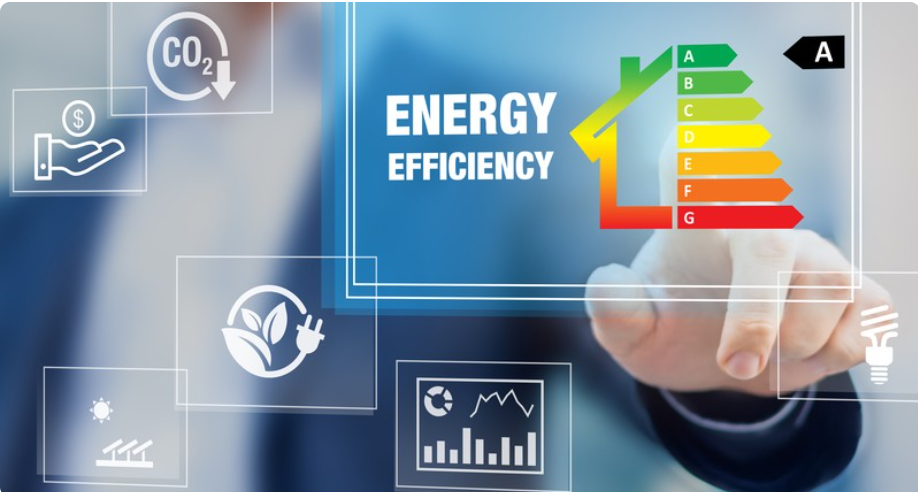
When comparing smart home appliances, check their energy-efficiency ratings rather than assuming connected features automatically reduce electricity use.
This is one of the most misunderstood parts of smart home technology.
A smart appliance is not automatically energy efficient simply because it is smart.
The energy efficiency of the actual appliance matters much more than whether it has Wi-Fi.
For example, an efficient refrigerator with smart connectivity can be a better choice than an inefficient smart refrigerator.
ENERGY STAR explains that certified connected appliances can combine lower energy use with features such as energy reporting, scheduling, alerts, and demand-response capabilities.
Smart technology can help you use an efficient appliance more intelligently.
For instance, scheduling a dishwasher or washing machine during lower-cost electricity periods may help reduce operating costs where time-of-use pricing is available. Australia’s government energy guidance also notes that smart appliances can make it easier to use off-peak electricity rates.
So instead of thinking:
Smart = automatically saves electricity
think:
Efficient appliance + useful smart features + sensible usage = potential savings.
That is a much more realistic way to look at it.
Smart appliances sound impressive, but they are not perfect.
Before buying one, it is important to understand the disadvantages.
1. Higher Initial Cost
The most obvious disadvantage is price.
A smart version of an appliance can cost more than a comparable conventional model.
You are not just paying for the basic appliance. You may also be paying for:
- Wi-Fi connectivity
- Sensors
- Displays
- Software
- Additional electronics
- Smart-home compatibility
If you don’t need these features, the extra cost may not be worthwhile.
2. More Complicated Technology
A traditional appliance can be wonderfully simple.
You press a button, turn a knob, and it works.
Smart appliances introduce additional technology into the equation. You may need an app, Wi-Fi connection, account, updates, or compatible devices.
For someone who prefers simple controls, this can actually be a disadvantage.
3. Dependence on Apps and Connectivity
Some smart features depend on internet connectivity or a manufacturer’s app.
That means a problem with your Wi-Fi, phone, account, or the manufacturer’s service could affect certain connected functions.
The basic appliance may continue working, but some smart features might not.
Compatibility is another issue. ENERGY STAR specifically points out that not all smart devices necessarily work together and recommends considering communication protocols and compatibility when building a connected home.
4. Privacy and Security Considerations
Connected appliances collect and transmit information in ways that traditional appliances generally do not.
That means consumers should pay attention to account security, software updates, privacy policies, and the permissions requested by companion apps.
The more connected devices you have, the more important it becomes to manage your smart-home ecosystem responsibly.
5. Repairs Can Be More Complicated
Before buying smart home appliances, compare warranty coverage, repair availability, and replacement-part costs.
A conventional appliance already contains plenty of mechanical and electrical components.
A smart appliance adds electronics, sensors, communication modules, and software.
When something goes wrong, the repair can potentially become more complicated.
This doesn’t mean smart appliances are unreliable. It simply means there can be more technology involved.
6. Some Features Are More Gimmick Than Necessity
Let’s be honest: not every smart feature is revolutionary.
A refrigerator with a huge touchscreen might look impressive, but ask yourself:
Will I actually use it every day?
The same applies to voice commands, elaborate notifications, entertainment features, and other extras.
The best smart appliance isn’t necessarily the one with the longest feature list.
It’s the one with features you’ll actually use.
Do Smart Homes Use More Electricity?
They can, but they don’t necessarily have to.
This is one of the most important questions when discussing smart home appliances.
Smart devices often need some electricity even when they aren’t actively performing their main job because they may remain connected and ready to receive commands.
The U.S. Department of Energy explains that some devices consume electricity while appearing to be turned off, a phenomenon commonly described as standby power.
So, yes, adding lots of connected devices can increase standby electricity consumption.
However, that doesn’t mean a smart home will automatically have a higher electricity bill.
The whole purpose of energy-focused smart technology is to control larger energy loads more intelligently.
For example, a smart thermostat itself uses relatively little electricity, while controlling heating and cooling equipment that consumes much more energy. ENERGY STAR identifies smart thermostats as an important energy-saving technology because they can automatically adjust temperature settings when people are asleep or away.
This creates an important distinction:
The smart device may use a little electricity, while helping you save much more electricity through better control.
Australia’s energy guidance similarly notes that smart-home systems add to standby power, but the energy savings they can achieve can exceed the additional energy they consume.
So the answer depends on how your smart home is designed.
A house filled with dozens of connected gadgets that are always active may waste energy.
A thoughtfully designed smart home that automates lighting, heating, cooling, and appliance schedules can potentially use energy more efficiently.
Smart Home Appliances vs Traditional Appliances
| Feature | Traditional Appliances | Smart Appliances |
| Basic operation | Yes | Yes |
| Smartphone control | Usually no | Usually yes |
| Remote monitoring | No | Often available |
| Scheduling | Basic or limited | Often advanced |
| Notifications | Limited | Common |
| Energy monitoring | Rare | Available on some models |
| Automation | Limited | More advanced |
| Internet required | No | Often for smart features |
| Initial price | Usually lower | Usually higher |
| Ease of use | Generally simple | Depends on the model |
| Maintenance complexity | Generally simpler | Potentially more complex |
The table makes one thing clear: smart appliances aren’t necessarily replacements for traditional appliances. They are traditional appliances with additional layers of technology.
Final Verdict: Are Smart Home Appliances Worth the Extra Cost?
Ultimately, smart home appliances are worth the extra cost when their features provide practical benefits that justify the price.
So, are home appliances worth the extra cost?
Sometimes—and the answer depends on how you live.
home appliances can provide genuine benefits through remote control, automation, scheduling, notifications, energy monitoring, and integration with other smart-home devices. ENERGY STAR also highlights connected appliance features that can provide convenience and potential energy savings.
However, smart doesn’t automatically mean better.
Some smart appliances cost considerably more without offering features that make a meaningful difference to everyday life. They can also introduce additional complexity, reliance on apps and connectivity, standby energy use, compatibility concerns, and potentially more complicated repairs.
The best strategy is simple:
Buy the best appliance first. Then decide whether its smart features are worth paying extra for.
If you’re replacing an old appliance anyway, a modern energy-efficient model with useful smart features can be a sensible investment.
If your existing appliance works perfectly and you’re considering replacing it solely because a newer model has Wi-Fi, you probably don’t need to rush.
Ultimately, the smartest home isn’t the one with the most gadgets.
It’s the one where technology actually makes everyday life easier, more efficient, and more comfortable.
Before buying smart home appliances, compare their features, energy efficiency, warranty coverage, and price to decide whether the extra cost is worthwhile.
Frequently Asked Questions
Are smart appliances worth buying?
They can be, particularly when you use features such as remote control, scheduling, notifications, automation, and energy monitoring. However, the additional cost should be compared with the practical benefits.
Do smart appliances save electricity?
They can help reduce energy waste, but being smart does not automatically make an appliance energy efficient. Look for an efficient appliance first, then consider smart features that help you control its usage.
Do smart appliances use more electricity?
Smart appliances may consume some standby electricity because their connected functions can remain active. However, smart controls can also help reduce energy consumption by improving scheduling, automation, and monitoring.
What is the biggest advantage of smart appliances?
For most users, the biggest advantage is convenience. Remote control, automatic scheduling, notifications, and monitoring can make everyday household tasks easier.
What is the biggest disadvantage of smart appliances?
The biggest disadvantages are usually the higher purchase price and additional technological complexity. Some smart features may also depend on apps, internet connectivity, or compatible ecosystems.