Introduction
Living in a small apartment does not mean giving up comfort, convenience, or modern technology. The key is to choose home appliances that fit the available space while performing more than one useful function. With careful planning, even a compact studio or one-bedroom apartment can feel organized, comfortable, and surprisingly spacious. Choosing the best home appliances for small apartments helps you save space, reduce clutter, and make everyday tasks easier.
The best home appliances for small apartments are usually compact, multifunctional, energy-efficient, and easy to store. Instead of filling every corner with single-purpose devices, apartment residents can select appliances that simplify several household tasks. A countertop oven that also air-fries, a washer-dryer combination, or a lightweight cordless vacuum can save valuable floor and counter space without compromising everyday convenience.
Appliance placement matters just as much as appliance size. Vertical storage, wall-mounted solutions, stackable designs, and under-counter units can help create a cleaner layout. Smart features can make compact living even easier by automating routines, reducing energy use, and allowing residents to manage appliances remotely.
This guide explores space-saving, smart, multifunctional, and energy-efficient appliances that can improve daily life in a small home. It also explains what to consider before buying, helping renters and homeowners create a practical apartment that feels more open.
Table of content
1. Why Appliance Selection Matters in a Small Apartment
2. Space-Saving Appliances That Make Small Apartments Feel Bigger
3. Smart and Multifunctional Appliances for Everyday Convenience
4. Energy-Efficient Appliances That Save Space, Time, and Money
5. How to Choose Appliances for a Small Apartment
6. Common Appliance-Buying Mistakes to Avoid
7. Frequently Asked Questions
8. Final Thoughts
Why Appliance Selection Matters in a Small Apartment
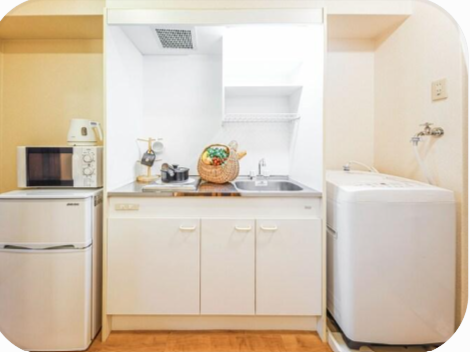
Every square foot matters when living in a compact home. A large appliance may offer additional capacity, but it can also block movement, overwhelm the room, and reduce useful storage. Choosing an appliance according to household size and actual usage is therefore more important than simply buying the biggest or most powerful model.
Compact appliances can improve both the appearance and function of an apartment. When counters are less crowded and floors remain clear, rooms look larger. It also becomes easier to clean, cook, work, and relax without constantly moving equipment from one location to another.
The right appliance can provide several important benefits:
● More usable space: Compact and integrated designs free up counters, cabinets, and floors.
● Better organization: Smaller appliances are easier to store and less likely to create visual clutter.
● Lower household costs: Efficient appliances can reduce electricity and water consumption.
● Greater convenience: Smart controls and automatic settings make daily tasks easier to manage.
● Improved flexibility: Portable appliances can be moved, folded, or stored when they are not needed.
Before purchasing anything, consider how often it will be used. An appliance that performs an essential task every day deserves accessible space. A product used once or twice a year may not be worth storing in a small home.
Space-Saving Appliances That Make Small Apartments Feel Bigger
Space-saving appliances are designed to deliver practical performance without taking over the room. They may have narrow dimensions, stackable structures, foldable parts, or built-in storage options. Some are portable enough to be placed inside a cabinet after use.
Compact Refrigerator
A compact refrigerator is one of the most important appliances for a studio, micro-apartment, guest suite, or one-person household. Unlike a miniature beverage fridge, a well-designed apartment refrigerator can include separate cooling and freezer sections while maintaining a narrow footprint. One of the best home appliances for small apartments is a compact refrigerator that provides enough storage without taking up too much floor space.
Before choosing a model, think carefully about grocery habits. People who cook frequently may need adjustable shelves, spacious vegetable drawers, and a usable freezer. Those who buy smaller amounts of fresh food may prefer an under-counter refrigerator that leaves more space available above it.
Look for reversible doors, removable shelves, and slim handles. A reversible door makes it easier to adapt the refrigerator to the kitchen layout, while adjustable shelves accommodate tall bottles and irregular containers. Avoid buying a refrigerator that is too small for normal needs, as overfilling can make organization difficult and restrict air circulation.
Countertop or Portable Dishwasher
A countertop dishwasher can be a valuable addition to an apartment without a built-in unit. It occupies far less room than a traditional dishwasher and can usually handle the daily dishes of one or two people. The best home appliances for small apartments often include multifunctional cookers, compact microwaves, and air fryers that make meal preparation convenient.
Some portable models connect directly to a kitchen faucet, while others include refillable water tanks. Tank-fed designs may be especially useful in rentals where plumbing modifications are not permitted. After use, certain compact models can be moved onto a cart or stored on a strong shelf.
A dishwasher may seem unnecessary in a tiny apartment, but it can keep the sink and counters free of dirty dishes. That visual improvement alone can make a compact kitchen appear cleaner and larger.
Slimline Washing Machine
A slimline washing machine provides in-home laundry convenience without requiring the width of a full-size machine. Front-loading models can often fit below a counter or inside a utility cabinet, while portable top-loading units may connect to a sink when needed. When selecting the best home appliances for small apartments, consider a compact washing machine or washer-dryer combination to save valuable space.
Apartment residents should review the building’s rules before installing a portable washing machine. Some buildings restrict these appliances because of drainage, water pressure, or leak concerns. When installation is allowed, features such as automatic load sensing and low-water cycles can make the machine more efficient.
Capacity should match the household’s needs. A smaller drum may require more frequent loads, but it can still be practical for one or two residents who wash clothing regularly.
Washer dryer combination
A washer-dryer combination performs washing and drying in a single drum. This eliminates the need for two separate machines and removes the step of transferring wet clothing between units.
Combination appliances are particularly useful in apartments without space for side-by-side laundry equipment. Ventless designs offer additional placement flexibility because they do not require an external exhaust duct. However, drying cycles can take longer than those of conventional dryers, and the drying capacity may be lower than the washing capacity.
For the best results, avoid overloading the drum and choose a model suited to the amount of laundry normally produced. A combination machine saves the most space when its capacity aligns with the user’s routine.
Two-Burner Induction Cooktop
A portable induction cooktop offers efficient meal preparation in a small kitchen. A two-burner model provides enough flexibility for everyday cooking while taking up considerably less space than a traditional range.
Induction cooking heats compatible cookware directly. The surrounding surface generally stays cooler than a conventional electric element, and the smooth top is easy to wipe clean. Because portable models can be stored after use, they also allow the counter to serve as a food-preparation or dining surface.
Before buying, check whether existing cookware is induction-compatible. Pots and pans with magnetic bases usually work, but glass, copper, and some aluminum cookware may require replacement or an appropriate interface solution.
Combination Microwave and Convection Oven
A combination microwave and convection oven can heat leftovers, bake small meals, roast vegetables, and sometimes grill or air-fry food. Replacing several devices with one unit reduces counter clutter and makes a small kitchen more functional.
Choose a model based on usable internal capacity rather than exterior size alone. It should be large enough for commonly used plates and cookware but compact enough to maintain safe ventilation around the appliance.
Preset programs can be convenient, but straightforward controls are equally important. A multifunctional appliance only saves time when household members can use its features without repeatedly consulting the manual.
Cordless Stick Vacuum
A full-size upright vacuum can be difficult to store in a studio apartment. A cordless stick vacuum is lighter, narrower, and easier to hang inside a closet or behind a door.
Many models convert into handheld vacuums for furniture, stairs, vehicles, and tight corners. This makes a cordless vacuum a practical replacement for several cleaning devices. Wall-mounted charging docks can also keep the machine off the floor.
Battery life should be considered alongside apartment size. A compact home may not require the longest-running model, but the battery should comfortably complete one full cleaning session.
Foldable or Wall-Mounted Fan
A tower fan, foldable pedestal fan, or wall-mounted fan can improve air circulation without occupying much space. Tower models have narrow footprints, while wall-mounted fans preserve floor area completely.
A fan can also help distribute heated or cooled air more evenly, potentially reducing reliance on more energy-intensive systems. Features such as sleep mode, oscillation, and programmable timers improve comfort without adding physical bulk.
Compact Air Purifier
An air purifier can help reduce airborne particles, odors, and dust in a small apartment. Compact rooms may trap cooking smells and pet odors, particularly when ventilation is limited.
Select an air purifier according to the intended room size. An undersized model may run continuously without cleaning the air effectively, while an unnecessarily large unit can consume extra space and energy. Also consider replacement-filter cost, noise level, and the amount of clearance required around the device.
Placing the purifier near a wall is convenient, but blocking its intake or outlet can reduce performance. Follow the manufacturer’s positioning guidance while keeping walkways clear.
Handheld Garment Steamer
A garment steamer is an excellent alternative to storing a large ironing board. It heats quickly, works on many fabrics, and can refresh clothing, curtains, and upholstery.
Compact handheld models fit inside a drawer or wardrobe shelf. They are especially useful for professionals, students, and frequent travelers who need presentable clothing without setting up a full ironing station.
Although a steamer may not create the same sharp creases as an iron, it is usually sufficient for removing everyday wrinkles. Its fast setup makes it more practical for apartment living.
Smart & Multifunctional Appliances for Everyday Convenience
Smart and multifunctional appliances are particularly valuable in small apartments because they reduce the number of devices needed. A single appliance may handle several tasks, while connected features allow users to monitor and control household routines more efficiently.
Smart Speaker with Home-Control Features
A smart speaker can function as a voice assistant, timer, alarm clock, music player, intercom, and control center for compatible devices. This can replace several separate items that might otherwise occupy bedside tables, desks, and kitchen counters.
Voice control is useful when cooking, cleaning, or carrying groceries. Residents can set timers, adjust connected lighting, or manage compatible appliances without touching a control panel.
Privacy settings should be reviewed during setup. Users should understand how to mute the microphone, delete recordings, and control which devices or services can access their account.
Smart Plugs
Smart plugs can turn ordinary appliances into remotely controlled devices. They are useful for lamps, fans, coffee makers, dehumidifiers, and other equipment designed to resume operation safely when power is restored.
Schedules can ensure that devices switch off automatically after a certain period. Energy-monitoring models may also help identify appliances that use unnecessary standby electricity.
Not every appliance should be used with a smart plug. Heating devices and high-power equipment require special caution. Always confirm that the plug’s electrical rating matches the connected appliance and follow the manufacturer’s safety instructions.
Multicooker
A multicooker can replace a pressure cooker, slow cooker, rice cooker, steamer, and, in some cases, a sauté pan or yogurt maker. It is one of the most versatile appliances for a compact kitchen.
The appliance is especially useful for preparing one-pot meals. Soups, grains, curries, beans, stews, and steamed vegetables can be cooked with limited supervision. Delayed-start and keep-warm settings can also help residents manage meals around busy schedules.
Choose capacity carefully. A large multicooker may occupy too much counter space, while a very small model may be restrictive for meal preparation. A moderate size is usually sufficient for one person, a couple, or anyone who prepares a few portions at a time.
Air Fryer Toaster Oven
An air fryer toaster oven combines the functions of a toaster, small oven, broiler, reheating appliance, and air fryer. It can reduce the need for several single-purpose countertop devices.
This type of appliance works well for toast, roasted vegetables, small pizzas, baked dishes, and crisp reheated food. It may also use less energy than heating a full-size oven for a small meal.
Check the external dimensions and required ventilation space before buying. The door must open fully without hitting nearby walls or objects, and heat-sensitive items should not be stored directly above the appliance.
Blender and Food Processor Combination
Instead of storing a separate blender, mini chopper, and food processor, consider a system that uses one motor base with interchangeable attachments. It can prepare smoothies, sauces, soups, dips, chopped vegetables, and small batches of dough.
Stackable cups and nested accessories can make storage easier. However, a large collection of poorly designed attachments may create more clutter rather than less. Choose a model with components that support the recipes prepared most often.
Dishwasher-safe attachments can also reduce cleanup time, making the appliance more convenient for daily use.
Robot Vacuum and Mop
A robot vacuum with mopping capability can maintain hard floors while residents work, sleep, or spend time outside the apartment. It occupies little storage space and often returns automatically to a compact charging dock.
Smart mapping, room selection, obstacle detection, and scheduled cleaning can improve its usefulness. In a small home, regularly removing surface dust and crumbs may also make the space feel more organized.
Robot cleaners do not eliminate all manual cleaning. Corners, stairs, upholstery, and difficult edges may still need attention. Nevertheless, they can reduce the frequency of full cleaning sessions.
Smart Lighting
Smart bulbs can replace lamps, timers, and some dedicated mood-lighting devices. Adjustable brightness and color temperature allow one room to serve several purposes throughout the day.
Bright, cooler lighting can support work and food preparation, while warmer, dimmer lighting can create a more relaxing atmosphere in the evening. Automations can turn lights off when residents leave, reducing unnecessary energy use.
Smart lighting can also make a small apartment feel more spacious. Well-lit corners, under-cabinet areas, and vertical surfaces reduce dark zones that visually shrink a room.
Convertible Heating and Cooling Appliances
In climates where both heating and cooling are needed, a combination appliance may be more practical than storing separate seasonal devices. Certain portable units provide cooling, dehumidification, air circulation, and supplemental heating.
These products still require careful sizing and placement. Portable air conditioners may need a window exhaust kit, and heaters need safe clearance from furniture and fabrics. Noise levels
are particularly important because a single appliance may operate close to the bed, sofa, or work area.
Smart Coffee Maker or All-in-One Beverage Station
Coffee equipment can quickly consume kitchen space. An all-in-one machine that brews multiple serving sizes or handles different beverage styles may replace a drip coffee maker, kettle, grinder, and specialty brewer.
The best option depends on personal habits. Someone who drinks one simple cup each morning may benefit from a compact single-serve brewer. A household that regularly prepares different beverages may gain more value from a multifunctional station.
Focus on daily usefulness rather than the number of advertised settings. Unused features still occupy space and often make cleaning more complicated.
Energy-Efficient Appliances That Save Space, Time & Money
Energy-efficient appliances can lower utility bills while reducing environmental impact. In small apartments, they may also improve comfort because efficient products often produce less excess heat, use less water, and operate more quietly.
Energy-Efficient Refrigerator
A refrigerator runs continuously, making efficiency especially important. Choose a capacity that suits the household rather than buying unused storage. An oversized refrigerator consumes space and may require more energy than necessary.
Useful efficiency features include inverter compressors, effective insulation, temperature controls, and door alarms. Good organization also helps. When food is easy to find, the door remains open for less time.
Leave the recommended ventilation space around the unit and clean accessible coils or vents as directed. Even an efficient refrigerator may perform poorly if airflow is restricted or maintenance is neglected.
Inverter air conditionerrr
An inverter air conditioner adjusts compressor output instead of repeatedly switching at full power. This can maintain a steadier temperature and improve efficiency under suitable conditions.
Correct sizing is essential. A unit that is too small may struggle continuously, while one that is too large can cool unevenly and cycle inefficiently. Room area, insulation, sunlight, ceiling height, and local climate should all influence the choice.
Portable units offer flexibility, but window or split systems are often more efficient when installation is possible. Renters should obtain permission before making structural changes.
When apartment laundry facilities permit installation, a heat-pump dryer can offer an efficient alternative to traditional resistance-based drying. It reuses heat within the drying process and does not require the same type of external venting as a conventional dryer.
Compact ventless dryers can fit below counters or stack with compatible washers. Drying may take longer, but lower-temperature operation can be gentler on clothing.
The lint filter and other required components must be cleaned regularly. Proper maintenance supports efficiency, prevents extended drying times, and protects the appliance.
Induction Cooking Appliances
Induction cooktops transfer energy directly to compatible cookware, allowing them to heat quickly and respond rapidly to temperature changes. Their compact form makes them suitable for limited kitchen space.
Because the cooking surface does not rely on a large exposed heating element, cleanup is generally easier. Faster heating can also reduce the time spent preparing simple meals.
Residents should still use induction appliances on stable, heat-resistant surfaces with appropriate ventilation. Electrical requirements must be checked, especially when other high-power appliances share the same circuit.
Electric Pressure Cooker
An electric pressure cooker reduces cooking time by preparing food under pressure. It can be efficient for beans, grains, tougher cuts of meat, soups, and stews that would otherwise require long periods on a stovetop or in an oven.
Its sealed cooking environment also produces less kitchen heat, which can be helpful in a compact apartment. Batch cooking can save additional time and energy by creating several meals in one session.
Follow filling limits and safety instructions closely. Pressure-release methods vary by recipe, and vents should remain clean and unobstructed.
Low-Water Dishwasher
An efficient dishwasher can use water more systematically than washing every item under a continuously running tap. Compact models allow small households to gain this benefit without dedicating space to a full-size unit.
Run the dishwasher with an appropriately full load, but avoid blocking the spray arms. Eco cycles may take longer because they rely on optimized water and temperature use rather than aggressive heating.
Scrape food residue from plates instead of automatically pre-rinsing everything. Pre-rinsing can waste water and is not always necessary with modern detergents and suitable wash programs.
LED Task Lighting
LED lighting is not a traditional appliance, but it plays an important role in creating an efficient small home. LED bulbs use less electricity than older incandescent options and generally last much longer.
Under-cabinet strips, plug-in sconces, and adjustable desk lamps can illuminate work areas without adding bulky floor lamps. Targeted lighting also reduces the need to brighten the entire apartment when only one area is being used.
Choose the color temperature according to the space. Neutral or cooler light works well for kitchens and desks, while warmer light creates a comfortable atmosphere in sleeping and relaxation areas.
Efficient Dehumidifier
Excess humidity can make a small apartment feel uncomfortable and may contribute to condensation or musty odors. A properly sized dehumidifier can help manage moisture, especially in basements, bathrooms, or humid climates.
Select a model based on room conditions rather than choosing the largest capacity available. Features such as automatic humidity control, washable filters, timers, and automatic shutoff can prevent unnecessary operation.
A continuous-drain option may save time, but it requires a safe drainage point. Otherwise, the water tank must be emptied regularly.
How to Choose Appliances for a Small Apartment
Buying compact appliances requires more than checking the product width. The surrounding environment, electrical supply, storage plan, and household routine all affect whether an appliance will work well.
Measure the Entire Route
Measure the intended location, but also measure doors, hallways, elevators, staircases, and tight corners. An appliance that fits beneath the counter is useless if it cannot pass through the apartment entrance.
Allow room for ventilation, cables, plumbing connections, and fully opened doors. Manufacturer clearance recommendations should be treated as functional requirements rather than optional suggestions.
Prioritize Multifunctionality
Choose appliances that replace two or more devices, but make sure every major function is genuinely useful. A seven-in-one appliance offers little value when six settings are never used.
The most effective multifunctional appliances perform related tasks. A microwave and convection-oven combination makes practical sense because both functions involve heating food. Appliances with unrelated, poorly executed features may be harder to maintain and less reliable.
Consider Storage Before Buying
Decide where an appliance will live before bringing it home. Counter space should generally be reserved for items used daily. Weekly-use appliances can go into accessible cabinets, while rarely used products should be reconsidered.
Check the appliance’s weight if it must be moved frequently. A compact appliance may still be too heavy or awkward to lift safely from a low shelf.
Review Energy and Water Consumption
Compare estimated annual energy use, not only purchase price. A cheaper appliance may cost more over time if it operates inefficiently.
Water use also matters for dishwashers and washing machines. Efficient cycles may take longer, so compare program duration with your daily routine. The most efficient setting is only useful when residents are willing to use it consistently.
Check Noise Levels
Noise has a greater impact in small apartments because there is less distance between appliances and living areas. A refrigerator compressor, robot vacuum, portable air conditioner, or washing machine may be clearly audible from the bed or workspace.
Look for published decibel ratings where available. Reviews can also reveal whether an appliance produces irritating vibrations, alarms, or sudden changes in sound.
Think About Rental Restrictions
Renters should check lease terms and building policies before installing washing machines, dishwashers, air conditioners, or wall-mounted devices. Plumbing and electrical modifications may require written approval.
Freestanding, portable, and non-permanent products are often easier to use in rentals. Even then, water connections, drainage, ventilation, and floor protection must be handled carefully.
Examine Cleaning and Maintenance Requirements
An appliance that is difficult to clean may eventually become an unused source of clutter. Removable trays, washable filters, accessible water tanks, and dishwasher-safe attachments simplify maintenance.
Also check the availability and price of replacement filters, bags, batteries, and other consumable components. A low purchase price can become expensive if proprietary supplies must be replaced frequently.
Common Appliance-Buying Mistakes to Avoid
Small-apartment residents often focus on dimensions but overlook usability. Avoiding a few common mistakes can prevent wasted money and overcrowded rooms.
● Buying for occasional possibilities: Choose appliances according to normal routines, not rare events such as hosting a large party once a year.
● Ignoring door clearance: Refrigerator, washer, oven, and dishwasher doors need enough room to open without blocking walkways.
● Overloading electrical circuits: High-power appliances should not be grouped carelessly on one outlet or extension device.
● Choosing features over function: Extra programs are not valuable when the basic controls are confusing or performance is inconsistent.
● Forgetting ventilation: Microwaves, ovens, dryers, refrigerators, and portable climate appliances need adequate airflow.
● Keeping duplicate appliances: Once a multifunctional appliance replaces older devices, remove or donate unnecessary duplicates.
● Ignoring maintenance costs: Filters, descaling products, replacement parts, and specialized accessories can affect long-term affordability.
● Selecting an unsuitable capacity: A model that is too small may require repeated cycles, while one that is too large wastes space.
Frequently Asked Questions
What are the most essential appliances for a small apartment?
The essentials depend on the building and household, but most apartments benefit from a refrigerator, a safe cooking appliance, a vacuum, and suitable heating or cooling equipment. A microwave-convection combination, induction cooktop, or multicooker can cover several kitchen tasks without requiring a full collection of appliances.
Are multifunctional appliances worth buying?
They are worth buying when their functions match regular needs and perform reliably. A washer-dryer combination or air fryer toaster oven can save substantial space. However, a complicated appliance with many unused accessories may create additional clutter.
How can appliances make a small apartment look bigger?
Choose narrow, low-profile, or built-in designs and keep counters clear. Appliances with simple shapes and consistent finishes reduce visual clutter. Wall-mounted storage, concealed cables, and good task lighting can also make the room feel more open.
What is the best cooking appliance for a studio apartment?
A multicooker is ideal for one-pot meals, while an induction cooktop offers greater control for stovetop cooking. A combination microwave-convection oven provides the widest range of reheating and baking functions. The best choice depends on cooking habits, ventilation, and available counter space.
Can smart appliances reduce utility bills?
Smart controls can reduce waste through schedules, remote shutoff, energy monitoring, and automated temperature management. Savings depend on how the devices are configured and used. A connected appliance is not automatically efficient simply because it includes smart features.
Is a portable washing machine suitable for an apartment?
It can be suitable when the building permits it and the apartment has safe water, drainage, and electrical connections. Residents should verify lease restrictions and protect the floor from leaks. The machine’s load capacity should also match normal laundry needs.
How many appliances should be kept on a small kitchen counter?
There is no universal number, but only frequently used appliances should remain visible. Keeping one or two daily essentials on the counter generally creates a cleaner workspace. Less frequently used items should have designated cabinet or shelf storage.
Final Thoughts
The best home appliances for small apartments are not necessarily the smallest products available. They are the appliances that provide the right balance of size, function, efficiency, and convenience for the household. Ultimately, the best home appliances for small apartments are the ones that fit your space, match your lifestyle, and deliver reliable everyday performance.
Compact refrigerators, portable dishwashers, washer-dryer combinations, induction cooktops, cordless vacuums, and handheld steamers can preserve valuable space. Multifunctional options such as multicookers, combination ovens, robot vacuum-mops, and smart home controls can reduce clutter while simplifying everyday routines. Energy-efficient products can further lower utility costs and make a compact home more comfortable.
Successful small-apartment living starts with intentional choices. Measure carefully, prioritize appliances used regularly, review installation requirements, and consider long-term operating costs. When every appliance has a clear function and a designated place, even a modest apartment can feel spacious, organized, and fully equipped.